VERIFIED IDENTITY
Grandis Palythoa Zoa / Grandis Palythoa Zoanthid
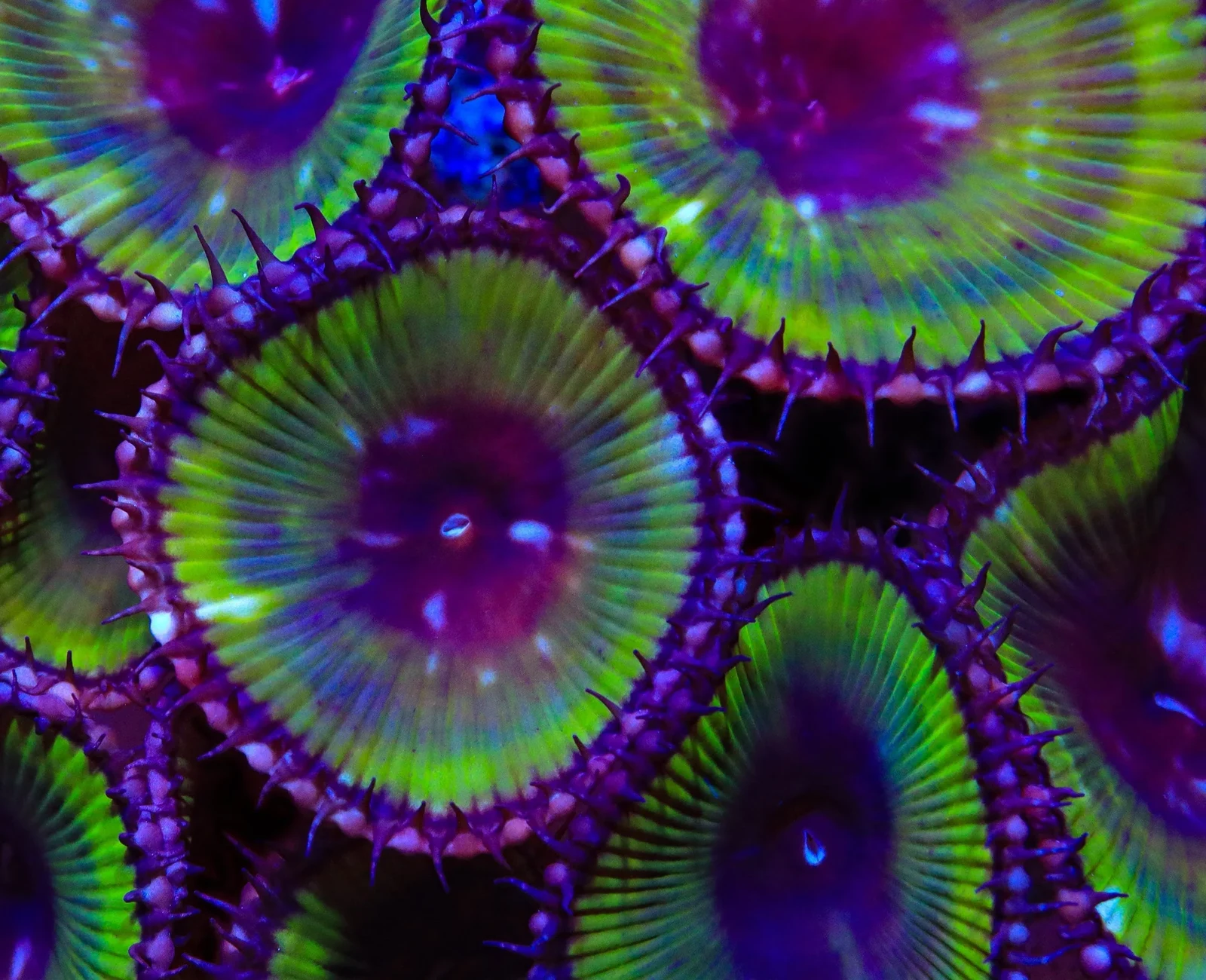
Grandis Palythoa is a named zoanthid morph recorded in the Zoa Scan UK zoanthid catalogue. Its observed colour profile combines a purple centre, green body or oral disc and purple skirt, arranged in a concentric pattern. These recorded traits help reefkeepers compare specimens, although appearance can vary with aquarium lighting, photography and colony condition. Zoa Scan records this morph as moderate in difficulty, with low-moderate lighting and low-moderate water flow, together with a moderate growth rate. These care details are catalogue observations rather than guarantees, so stable reef conditions and gradual acclimation remain important. Use this profile to identify Grandis Palythoa zoanthids, compare current UK retailer observations and review captive-grown community frags. Check the complete colour pattern and available source evidence rather than relying on the trade name alone.
No alternate names are currently recorded
CURRENT UK AVAILABILITY
Approved retailer observations
Zoa Scan does not sell livestock, process payments or control retailer availability, delivery or guarantees.
COMMUNITY LISTINGS
Frags from fellow keepers
No active community listings for this morph.
RECORDED OBSERVATIONS
Grandis Palythoa growth and placement notes
- Lighting
- Low-moderate
- Flow
- Low-moderate
- Growth
- Moderate
- Difficulty
- Moderate
These are catalogue observations, not guarantees. Results vary with aquarium conditions, livestock health and husbandry.
A zoanthid trade name does not indicate whether palytoxin is present. Use appropriate precautions and read the responsible reefkeeping safety guide.