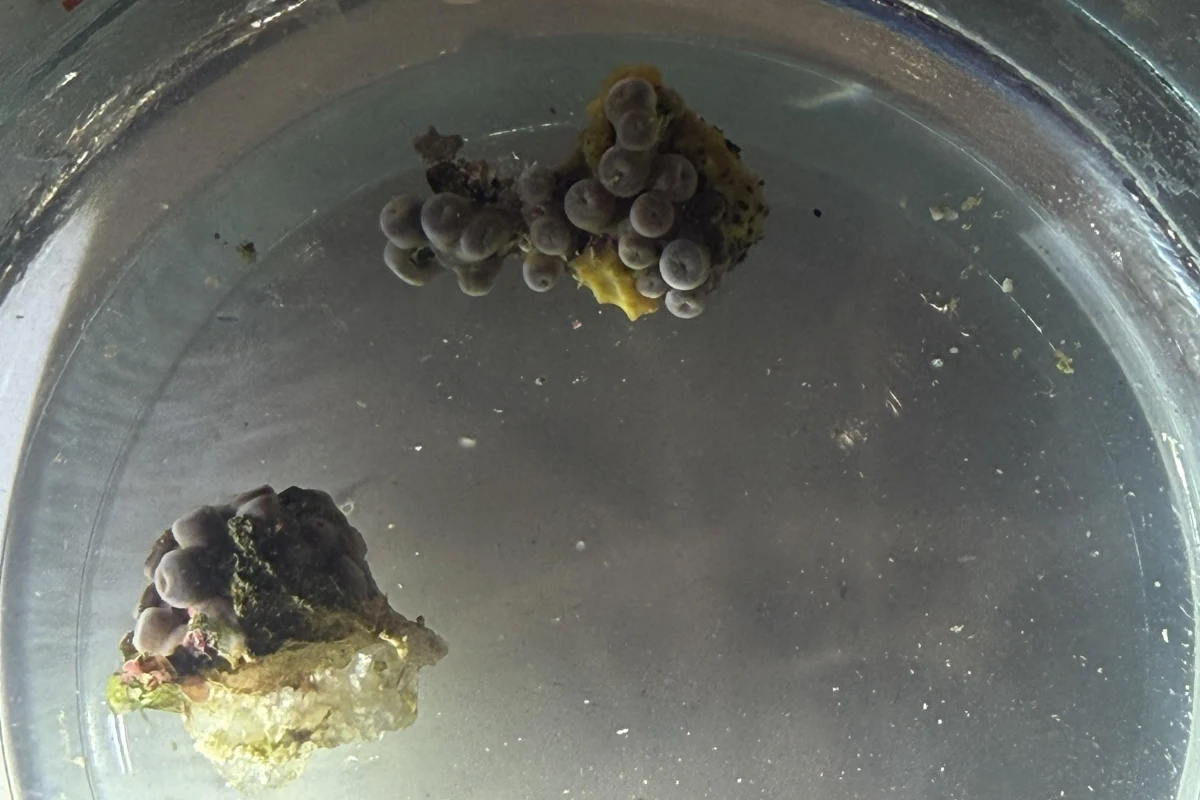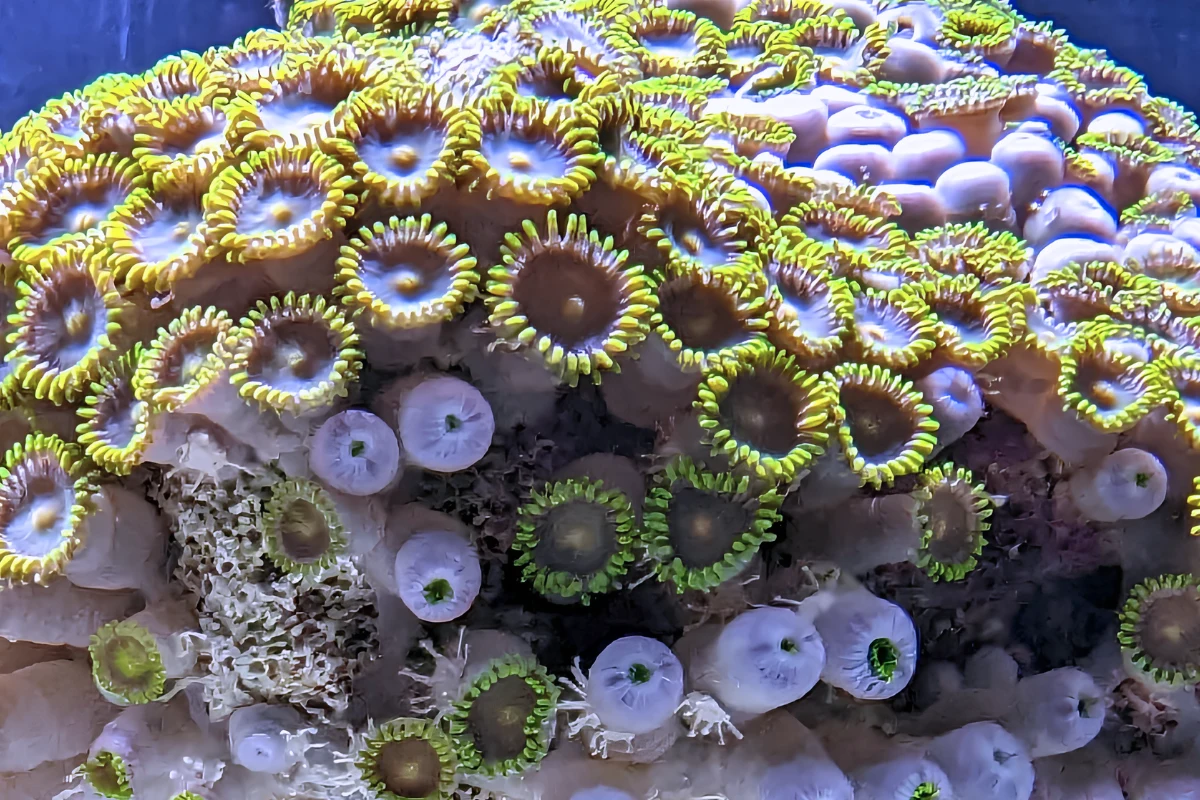
Zoanthids, usually shortened to zoas by reefkeepers, are among the most colourful and varied corals we can keep in a reef aquarium. They range from tiny, intensely coloured polyps to large colonies that can spread across entire sections of rockwork, with hundreds of named morphs collected and traded within the hobby.
Zoanthids are often described as beginner-friendly, and many morphs are remarkably adaptable. That does not mean they thrive on neglect. The best zoanthid displays come from stable water conditions, appropriate lighting, enough flow to keep the colony clean and sensible placement that gives the polyps room to grow.
This guide covers the fundamentals of zoanthid care. Individual morphs can behave differently, so use these recommendations as a starting point and pay attention to how your own colony responds.
Zoanthid Care at a Glance
| Requirement | Good starting point |
|---|---|
| Difficulty | Generally easy to moderate |
| Lighting | Low to moderate initially |
| PAR | Around 50-150 PAR is a useful starting range for many morphs |
| Water flow | Moderate, indirect and sufficient to prevent detritus settling |
| Placement | Lower to middle areas initially, then adjust according to response |
| Feeding | Primarily photosynthetic; supplementary feeding is optional |
| Growth | Varies greatly between morphs |
| Salinity | Around 1.024-1.026 specific gravity |
| Temperature | Around 24-26°C |
| Temperament | Can spread quickly and compete for rock space |
| Special consideration | Some zoanthids and related polyps may contain palytoxin |
What Are Zoanthids?
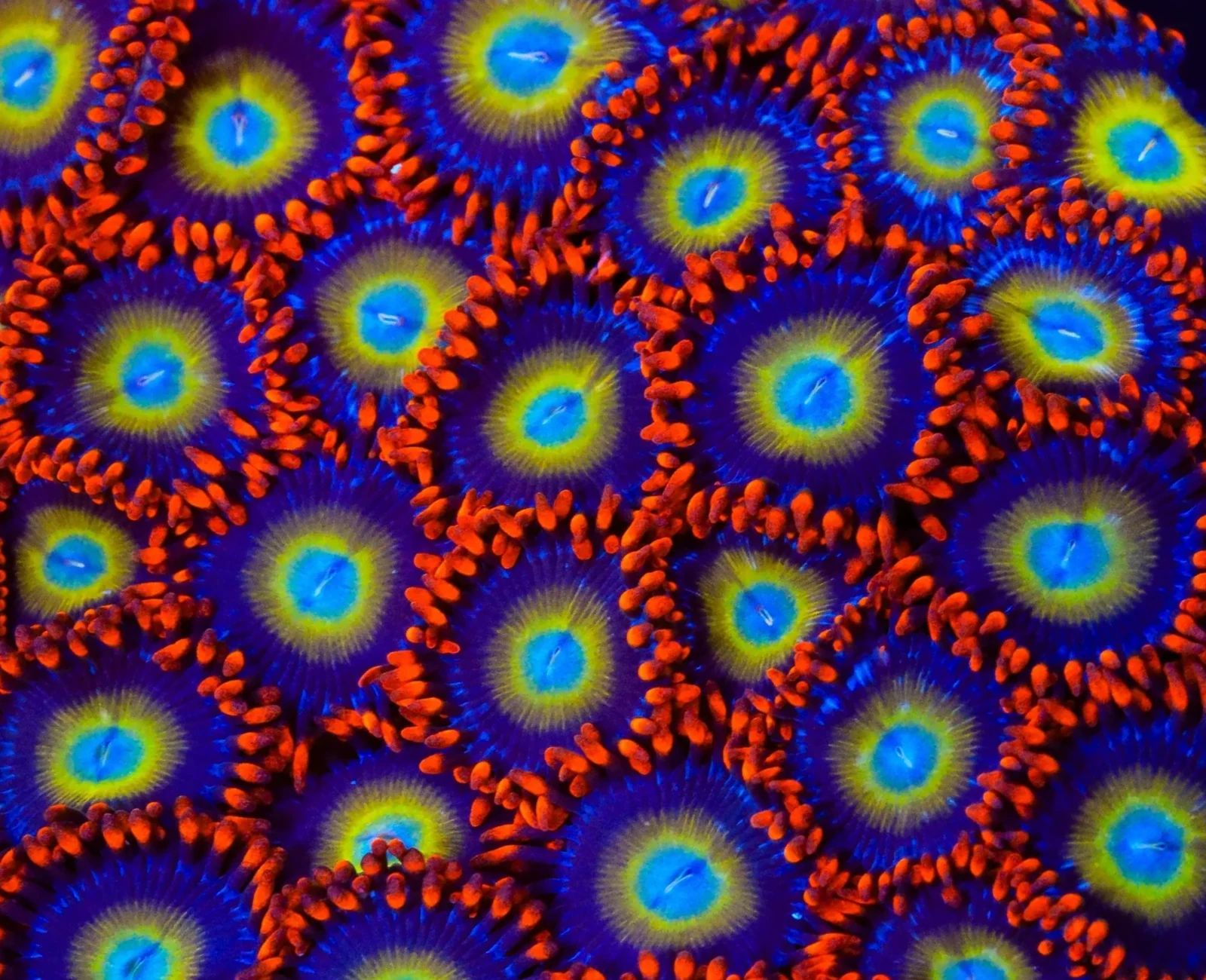
Zoanthids are colonial cnidarians belonging to the order Zoantharia. In the aquarium hobby, the words zoa and zoanthid are often used broadly to describe colourful button-like polyps that grow together across rock or frag plugs.
Each visible polyp is an individual animal connected to the colony by living tissue. As a healthy colony grows, new polyps form around the existing colony and gradually spread across suitable surfaces.
The hobby also uses hundreds of trade names such as Rasta, Utter Chaos and Scrambled Eggs to distinguish colour morphs. These names are useful to collectors but they are not scientific classifications, and the appearance of the same morph can change considerably under different aquarium lighting and conditions.
Rasta
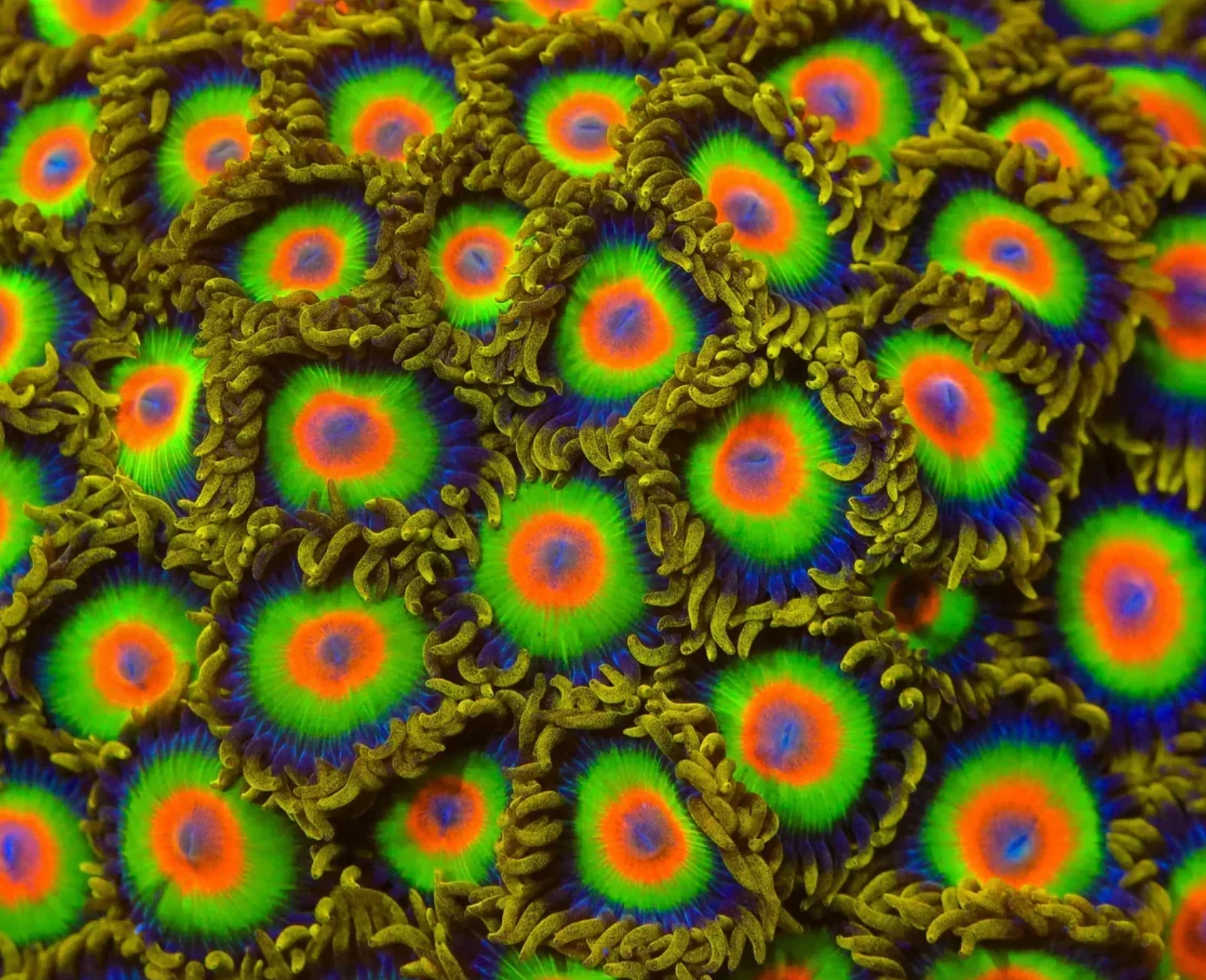
Rasta is a named zoanthid morph recorded in the Zoa Scan UK zoanthid catalogue. It is also recorded under the alias Rastas. Its observed colour profile combines a orange centre, blue body or oral disc and green skirt, arranged in a concentric pattern. These recorded traits help reefkeepers compare specimens, although appearance can vary with aquarium lighting, photography and colony condition. Zoa Scan records this morph as easy in difficulty, with moderate lighting and low–moderate water flow, together with a moderate growth rate. These care details are catalogue observations rather than guarantees, so stable reef conditions and gradual acclimation remain important. Use this profile to identify Rasta zoanthids, compare current UK retailer observations and review captive-grown community frags. Check the complete colour pattern and available source evidence rather than relying on the trade name alone.
Open catalogue record →Water Parameters for Zoanthids
Zoanthids do not require unusual water chemistry. A mature, stable reef aquarium with parameters appropriate for other photosynthetic corals will suit the majority of commonly kept zoas.
There is no single perfect nitrate, phosphate or alkalinity number that guarantees success. Instead, aim for sensible reef parameters and avoid abrupt changes.
| Parameter | Practical starting range |
|---|---|
| Temperature | 24-26°C |
| Salinity | 1.024-1.026 SG |
| pH | Approximately 8.0-8.4 |
| Alkalinity | Approximately 7.5-10 dKH |
| Calcium | Approximately 400-450 ppm |
| Magnesium | Approximately 1250-1450 ppm |
| Ammonia | Undetectable in an established aquarium |
| Nitrite | Undetectable in an established aquarium |
| Nitrate | Approximately 2-20ppm |
| Phosphate | Approximately 0.02-0.2ppm |
Should Zoanthids Have Nitrate and Phosphate?
Zoanthids live in an ecosystem where nutrients are continually recycled. Trying to force nitrate and phosphate to absolute zero is not a requirement for keeping them successfully.
A reef aquarium should instead aim for controlled, measurable nutrients without allowing excessive nutrient accumulation to fuel nuisance algae or other problems. Stability and the overall condition of the aquarium are more useful indicators than trying to hit one exact nitrate or phosphate number.
How Much Light Do Zoanthids Need?
One reason zoanthids are so popular is their ability to adapt to a relatively wide range of aquarium lighting. Many common morphs can thrive under low to moderate light, while others can tolerate or even favour considerably brighter conditions once acclimated.
For a new zoanthid frag with an unknown lighting history, around 50-150 PAR provides a useful starting zone for many morphs. This should not be treated as a universal target. Some colonies will prefer less and others will comfortably adapt to significantly more.
New zoanthids are usually better placed conservatively and acclimated gradually rather than being immediately exposed to the brightest part of the aquarium. Both BRS and Tidal Gardens describe zoanthids as adaptable to a broad range of lighting and emphasise acclimation when moving them into stronger light.
Can Zoanthids Get Too Much Light?
Yes. A zoanthid that has been kept under relatively weak lighting can react badly if suddenly moved into intense light.
Problems following a rapid increase in lighting can include prolonged closure, loss of colour or a generally stressed appearance. Rather than making another dramatic change, reduce the intensity or move the frag to a less exposed position and allow time for acclimation.
Whenever you substantially change aquarium lighting, remember that the coral is experiencing the change even if the new setting looks better to you.
Why Do Zoanthid Colours Change Under Different Lights?
Zoanthids can look dramatically different under different spectra. Fluorescent pigments that glow intensely beneath blue reef lighting may appear much more subdued under whiter light, while other colours become easier to see when more of the visible spectrum is present.
Lighting intensity can also affect how a colony develops over time. This is one reason photographs of the same named morph can vary substantially between aquariums.
For identification, try to consider the complete pattern of the polyp rather than relying on a single photograph taken under very blue lighting.
How Much Flow Do Zoanthids Need?
Zoanthids generally benefit from moderate water movement that moves water across and around the colony without continuously blasting the polyps in one direction.
Good flow performs an important housekeeping role. Zoanthid colonies can trap detritus between their polyps and around the mat from which they grow. Enough water movement helps keep this material suspended so that filtration can remove it.
If flow is excessively direct, polyps may remain partially or completely closed. If flow is too weak, waste and debris may collect around the colony. Tidal Gardens places particular emphasis on flow and keeping zoanthid colonies free from accumulated detritus.
Where Should You Place Zoanthids?
A lower or middle position in the aquarium is often a sensible starting point for a new zoanthid frag, particularly when you do not know the lighting conditions it previously experienced.
Placement should consider more than light. Look at flow, neighbouring corals, available growing space and whether the colony can easily be removed or trimmed in the future.
Fast-growing zoanthids can spread from the original frag plug onto surrounding rock. This is great when you want a large colony, but less helpful if a prized morph begins growing into neighbouring corals.
Using a Separate Zoa Island
A separate rock or island surrounded by sand is a popular way to create a zoa garden while making growth easier to control.
Different morphs can be positioned together to create contrasting colour combinations, but growth rates should be considered. One fast-growing variety may eventually crowd out a slower morph if the colonies are left unmanaged.
A dedicated island also makes it easier to remove the entire structure if maintenance or major fragging is ever required.
Utter Chaos
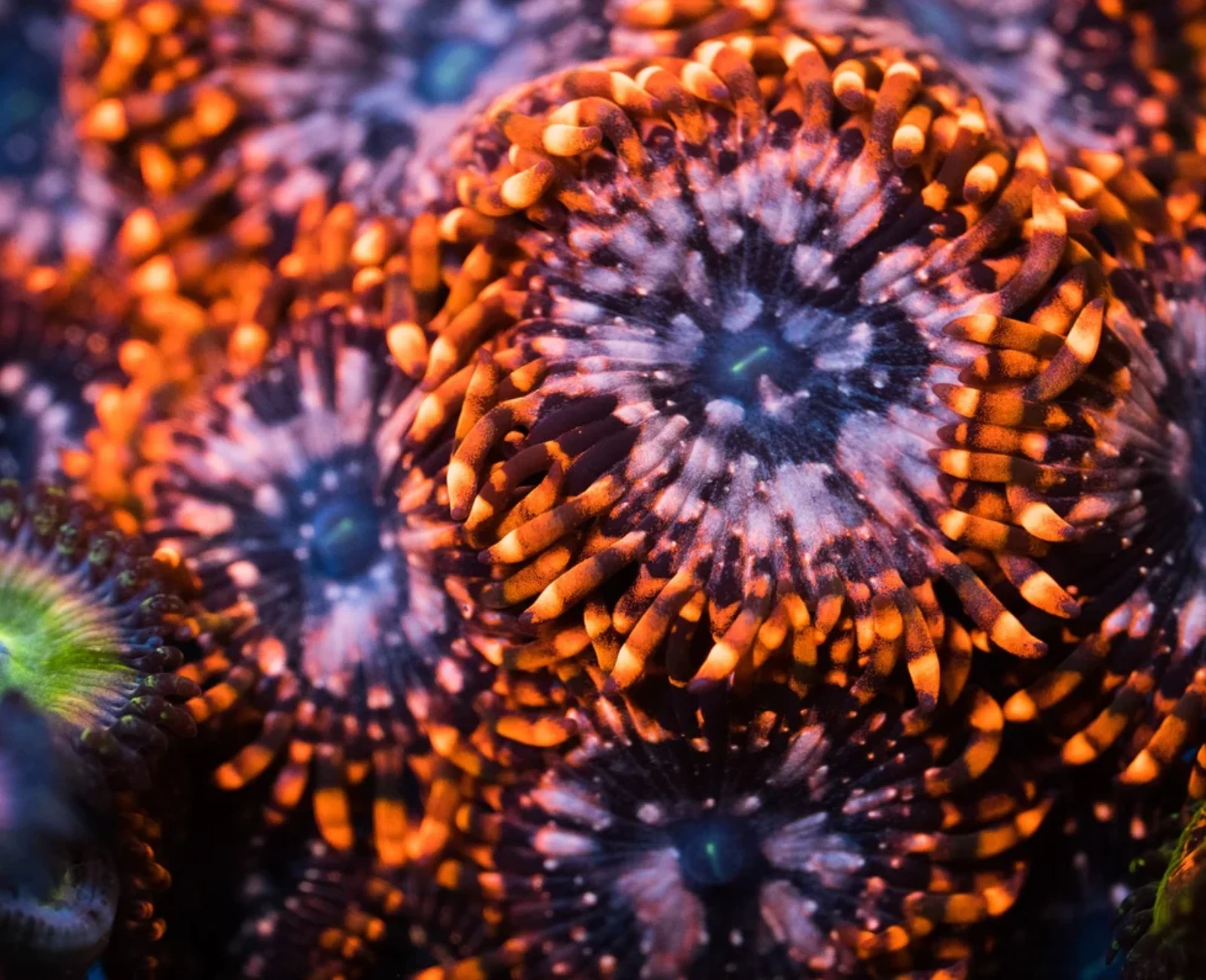
Utter Chaos is a named zoanthid morph recorded in the Zoa Scan UK zoanthid catalogue. It is also recorded under the alias UC Zoa. Its observed colour profile combines a orange centre, purple body or oral disc and orange skirt, arranged in a mottled pattern. These recorded traits help reefkeepers compare specimens, although appearance can vary with aquarium lighting, photography and colony condition. Zoa Scan records this morph as moderate in difficulty, with moderate lighting and moderate water flow, together with a slow growth rate. These care details are catalogue observations rather than guarantees, so stable reef conditions and gradual acclimation remain important. Use this profile to identify Utter Chaos zoanthids, compare current UK retailer observations and review captive-grown community frags. Check the complete colour pattern and available source evidence rather than relying on the trade name alone.
Open catalogue record →Do You Need to Feed Zoanthids?
Most commonly kept zoanthids obtain a substantial proportion of their energy through their relationship with photosynthetic symbiotic algae and can be maintained successfully without intensive target feeding.
Zoanthids are also animals, however, and some are capable of capturing appropriately sized suspended food particles. Occasional feeding can therefore be used as part of a broader husbandry routine, particularly for colonies that respond readily to food.
Not every morph displays the same feeding response, and excessive feeding can simply increase the nutrient load of the aquarium. Start lightly and observe whether the polyps actually capture the food.
How Fast Do Zoanthids Grow?
There is no universal zoanthid growth rate.
Some morphs can produce new polyps very quickly in favourable conditions, while others may grow much more slowly even when they appear completely healthy. Colony size, morph, lighting, flow, available space, nutrition and overall aquarium stability can all influence growth.
For this reason, the number of new polyps produced each month should not be used on its own as a measure of health.
A colony that opens consistently, maintains good tissue and colour and slowly produces new polyps may be doing perfectly well.
Adding New Zoanthids to Your Aquarium
New zoanthids deserve a careful inspection before entering the display aquarium. The polyps themselves may be healthy while the frag plug or surrounding rock carries algae, unwanted invertebrates, eggs or other hitchhikers.
If possible, quarantine new coral before adding it to an established collection. At the very least, inspect both the colony and the underside of the frag carefully.
- 1. Inspect the zoanthid and frag plug under good lighting.
- 2. Look around the base of the polyps and underneath the plug for pests, eggs or unwanted algae.
- 3. Remove obvious unwanted material where it can be done safely.
- 4. Use an appropriate commercial coral dip according to its instructions if dipping forms part of your quarantine routine.
- 5. Inspect the coral again after dipping because dips do not necessarily remove every pest or egg.
- 6. Introduce the frag to a sensible lower or moderate light position.
- 7. Give the colony time to settle before making repeated changes to its position.
Why Are My Zoanthids Closed?
A closed zoanthid is not automatically a dying zoanthid. Individual polyps routinely close when disturbed, while newly introduced colonies may take some time to settle.
Persistent closure across part or all of a colony deserves investigation, especially if the colony previously opened consistently.
- - A recent change in lighting
- - Flow that is too direct or substantially different from before
- - Detritus or algae irritating the colony
- - Unstable salinity, temperature or other water parameters
- - A nearby coral making physical contact
- - Fish or invertebrates repeatedly disturbing the polyps
- - Zoanthid-eating pests or their eggs
- - Tissue damage around the mat or base of the colony
- - A recent move, fragging or other physical disturbance
Common Zoanthid Pests and Problems
Zoanthids can be affected by several specialised predators as well as more general reef aquarium problems.
Hobbyists commonly watch for zoanthid-eating nudibranchs, sundial snails and zoanthid spiders. Eggs can be particularly difficult because removing or dipping the adult pest does not necessarily eliminate its complete life cycle.
Algae and accumulated debris can also irritate colonies without a specialist predator being present.
If a previously healthy colony begins closing repeatedly or declining without an obvious environmental change, a close inspection under both normal light and a torch after lights-out can be worthwhile.
This subject deserves more detail than can sensibly fit into a general care article, so it will be covered separately in the Zoanthid Pests & Common Problems Guide.
Keeping a Zoa Garden
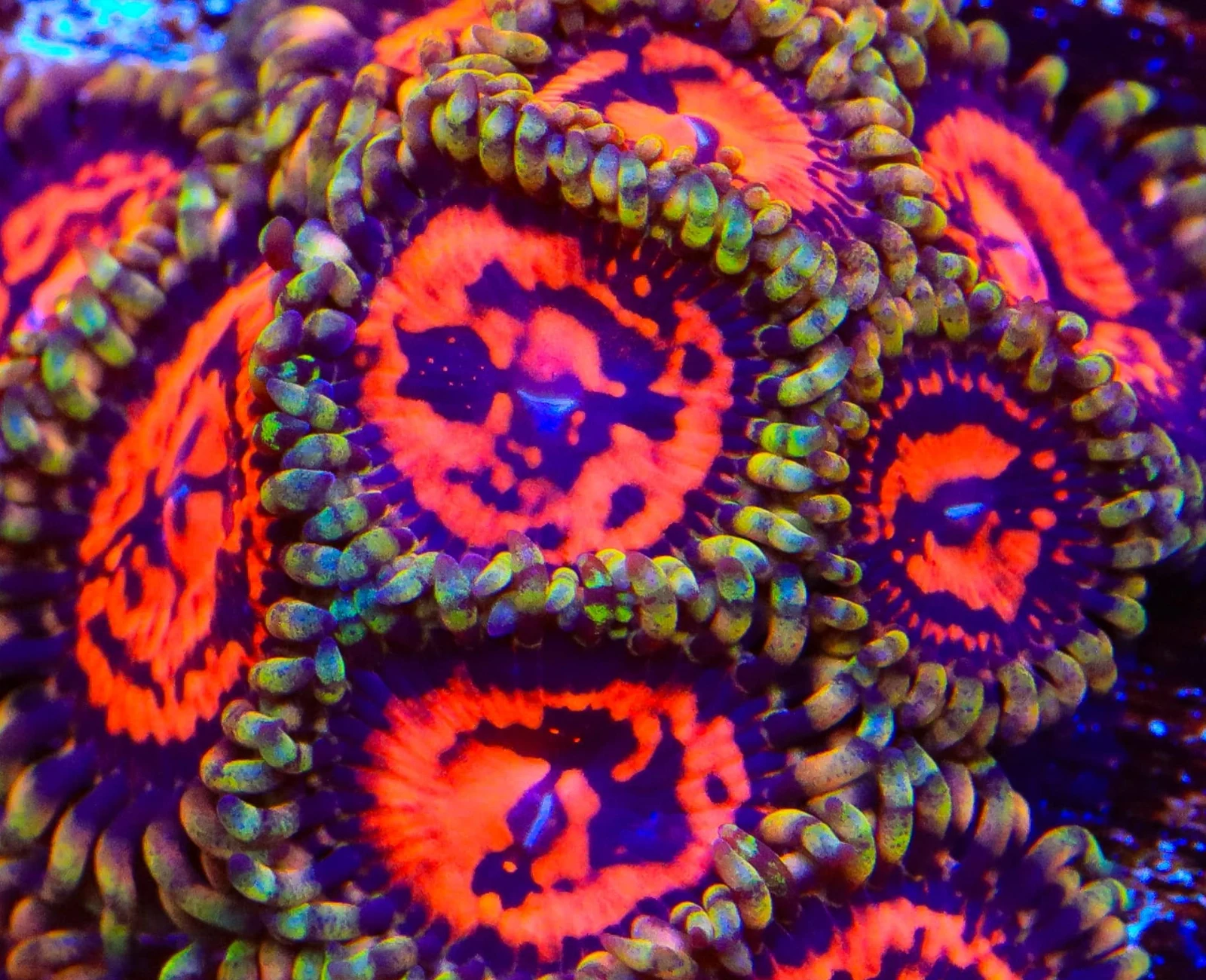
Combining several morphs on the same rock can create one of the most colourful displays in a reef aquarium. A well-planned zoa garden also gives collectors an opportunity to combine complementary colours and patterns rather than viewing each morph in isolation.
Think about the eventual colony rather than just the frag you are buying today. Leave room for expansion, consider differences in growth rate and make sure the rock can still be accessed for maintenance.
Choosing the right combinations is largely down to personal taste, which is exactly where Zoa Scan's catalogue and comparison tools can help. Compare morphs side by side before deciding which colours you would like to grow together.
Radioactive Dragon Eye
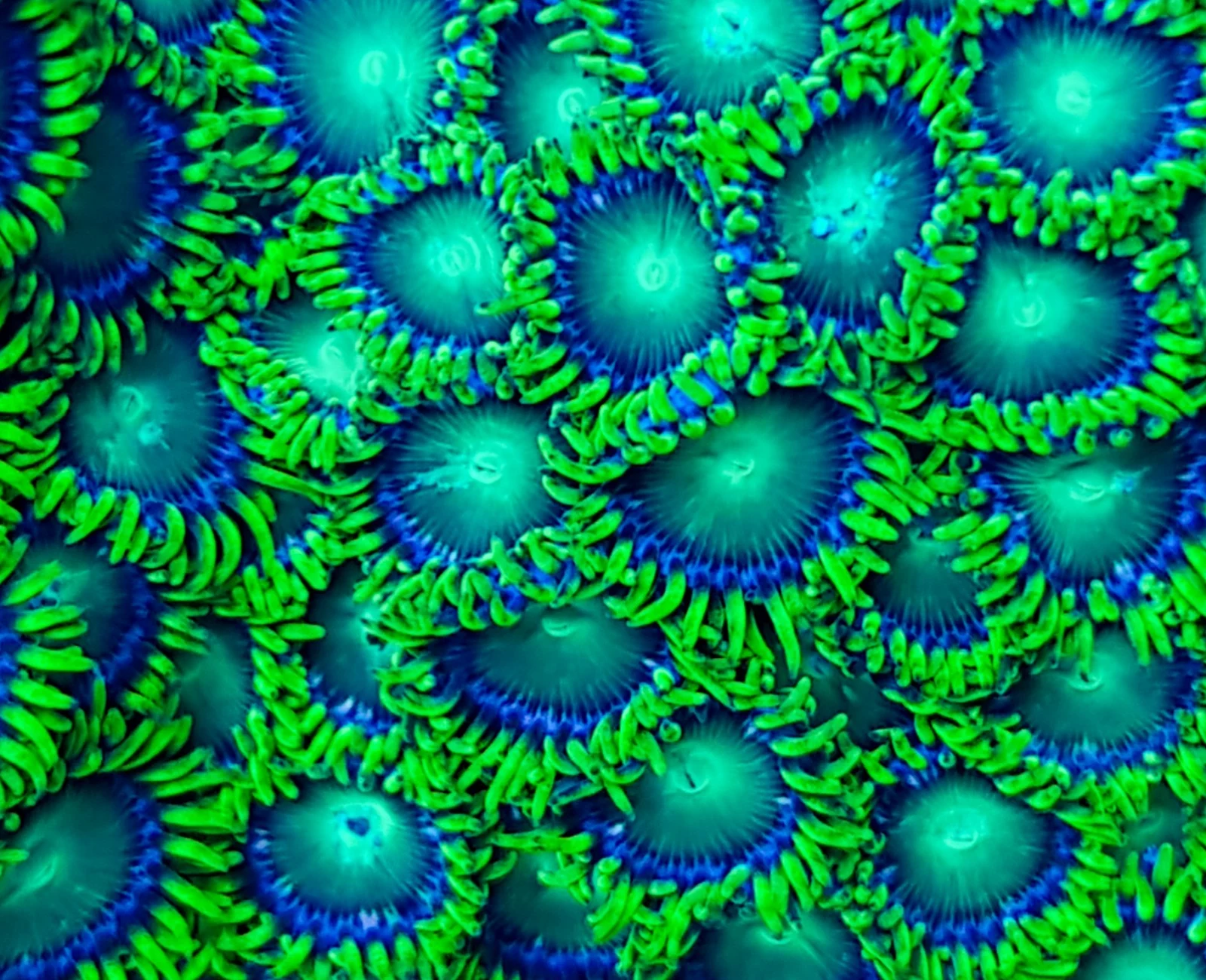
Radioactive Dragon Eye is a named zoanthid morph recorded in the Zoa Scan UK zoanthid catalogue. It is also recorded under the aliases RDE and Nuclear Dragon Eyes. Its observed colour profile combines a green centre, green body or oral disc and green skirt, arranged in a radial pattern. These recorded traits help reefkeepers compare specimens, although appearance can vary with aquarium lighting, photography and colony condition. Zoa Scan records this morph as easy in difficulty, with moderate lighting and low–moderate water flow, together with a moderate growth rate. These care details are catalogue observations rather than guarantees, so stable reef conditions and gradual acclimation remain important. Use this profile to identify Radioactive Dragon Eye zoanthids, compare current UK retailer observations and review captive-grown community frags. Check the complete colour pattern and available source evidence rather than relying on the trade name alone.
Open catalogue record →Zoanthid Safety and Palytoxin
The Key to Healthy Zoanthids
Successful zoanthid care is less about discovering a secret parameter and more about providing a stable environment in which the colony can adapt and grow.
Give new zoas sensible light, useful water movement and enough room to expand. Keep the colony clean, inspect new arrivals carefully and learn what a healthy, open colony looks like in your own aquarium.
Most importantly, make changes gradually. Zoanthids can be extremely adaptable when given time to adjust.
Once the basics are right, the difficult part is usually resisting the urge to collect another morph.
Frequently Asked Questions
Are Zoanthids Easy to Keep?
Many commonly available zoanthids are considered relatively forgiving corals and can be a good choice for reefkeepers who are still developing their coral-keeping experience. Individual morphs vary, however, and even hardy zoas benefit from a mature, stable aquarium.
Do Zoanthids Need High Light?
Not usually. Many zoanthids perform well under low to moderate reef lighting, although individual morphs can adapt to brighter conditions. Gradual acclimation is more important than immediately placing a new frag under intense light.
Do Zoanthids Need Feeding?
Target feeding is not essential for many zoanthids. They receive much of their energy through photosynthesis, although some morphs can capture small food particles and may respond positively to occasional supplementary feeding.
Why Is My New Zoa Not Opening?
A newly introduced zoanthid may remain closed while adjusting to different light, flow and water conditions. Check that it is not receiving excessive direct flow or intense light, inspect it for pests or damage and avoid repeatedly moving it unless there is a clear reason.
Can Different Zoanthid Morphs Grow Together?
Yes, and combining several morphs is how many reefkeepers create a zoa garden. Plan ahead for differences in growth rate and leave enough room for each colony to expand.
Are Zoanthids Dangerous?
Zoanthids themselves are routinely kept safely in home reef aquariums, but some zoanthids and related polyps may contain palytoxin. Safe handling is therefore important, particularly when fragging, cutting, removing or otherwise damaging colonies.